Introduction: The Treasure Hidden in Plain Sight
Walk into any modern health food store and you’ll find shelves lined with quinoa, chia seeds, acai berries, and kale chips all imported, all expensive, and all marketed as the next big superfood. But here’s the truth that your grandmother already knew: India has always had its own extraordinary superfoods. They were sitting quietly in her kitchen, growing in her backyard, and bubbling in her clay pots long before the word “superfood” was ever coined.
Somewhere between the rise of processed food culture and our obsession with Western wellness trends, we forgot about the humble horse gram, the mighty ragi, the overlooked rajgira, the powerful moringa, and the incredibly versatile water chestnut. These ingredients were once the backbone of Indian cooking eaten daily across generations and science is now confirming what our ancestors always knew: they are nutritional powerhouses.
This blog is a celebration of those forgotten Indian superfoods. We’re bringing them back to your kitchen through classic, time-tested recipes that are not only deeply rooted in our culinary heritage but are also incredibly good for your body. Whether you’re looking to boost energy, improve digestion, manage weight, or simply eat better these recipes are your answer.
Let’s rediscover the gold that was always ours.
What Are “Forgotten” Indian Superfoods?
Before we get to the recipes, let’s meet the superstar ingredients we’re working with. These are foods that were once staples of regional Indian diets but have slowly faded from everyday cooking in urban households.
Ragi (Finger Millet): A gluten-free grain packed with calcium, iron, and dietary fibre. Ragi contains more calcium than milk per 100 grams and was the primary weaning food for babies across South India for centuries.
Horse Gram (Kulthi Dal): One of the highest plant-based protein legumes in the world. Used widely in Karnataka, Andhra Pradesh, and Maharashtra, horse gram was prescribed in Ayurveda for kidney stones, obesity, and respiratory conditions.
Rajgira (Amaranth): A pseudo-grain eaten during Hindu fasts, rajgira is rich in lysine an amino acid missing from most grains. It’s high in protein, iron, and antioxidants.
Moringa (Drumstick Leaves): Called the “miracle tree” in global nutrition circles, moringa leaves contain more vitamin C than oranges, more calcium than milk, and more iron than spinach. Yet most Indians use only the drumstick pods and throw away the leaves.
Singhara (Water Chestnut Flour): Another fasting food that deserves everyday attention. Singhara flour is gluten-free, cooling in nature, and rich in potassium, manganese, and B vitamins.
Jowar (Sorghum): A drought-resistant millet that was eaten across Maharashtra, Rajasthan, and Karnataka for thousands of years. Rich in antioxidants, fibre, and B vitamins, jowar is now being recognised globally as a superfood grain.
Now, let’s cook with them.
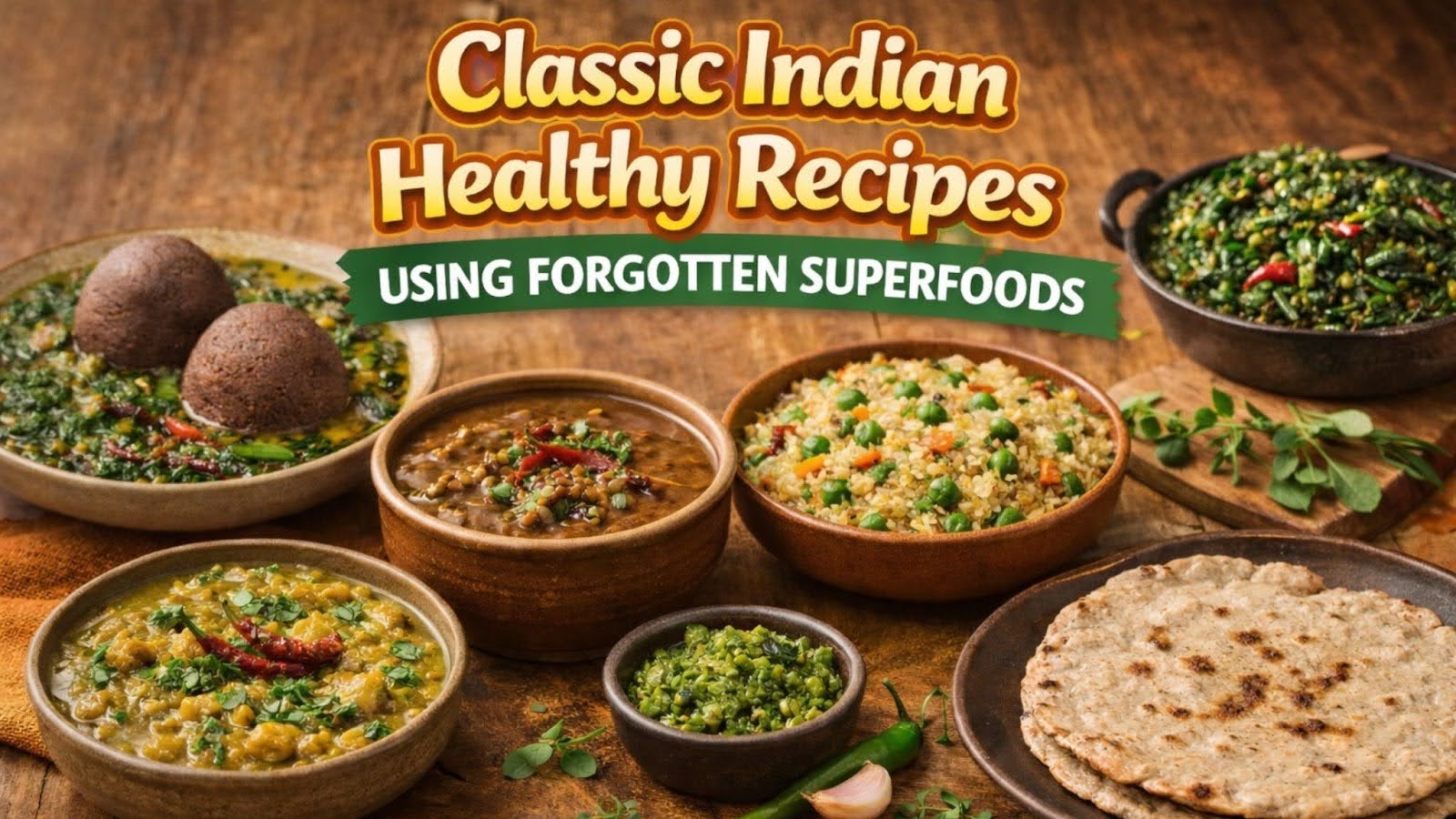
Classic Indian Healthy Recipes Using Forgotten Superfoods
1. Ragi Mudde with Palak Dal
Superfood: Ragi | Origin: Karnataka

Ragi mudde dense, dark balls made from finger millet is one of the most iconic dishes of rural Karnataka. Farmers have sustained themselves on this for generations, and it’s easy to understand why. Ragi mudde is extraordinarily filling, rich in calcium and iron, and has a very low glycaemic index making it ideal for diabetics and those managing weight.
How to make it: Boil water in a heavy-bottomed pan. Add a handful of ragi flour, stirring continuously to avoid lumps. Cook on low heat until the mixture becomes very thick and begins to pull away from the sides of the pan. Wet your hands, take portions, and roll into smooth, firm balls.
Pair with a simple palak dal: cook toor dal until soft, add blanched and pureed spinach, temper with mustard seeds, garlic, dried red chilli, and a squeeze of tamarind. The earthy, slightly nutty ragi mudde soaked in the tangy, iron-rich palak dal is a nutritional masterpiece.
Why it matters: One ragi mudde provides roughly 15–20% of your daily calcium requirement. Paired with spinach dal, this meal delivers iron, folate, protein, and fibre in a single bowl something no expensive supplement can replicate
2. Kulthi Dal (Horse Gram Soup)

Superfood: Horse Gram | Origin: South India & Maharashtra
Horse gram is not the prettiest of lentils. It’s small, brownish, and stubborn to cook. But what it lacks in looks, it makes up for in sheer nutritional power. Horse gram has the highest protein content among all cultivated legumes and is loaded with polyphenols that fight inflammation and oxidative stress.
In traditional homes across Karnataka and Andhra Pradesh, kulthi soup was the winter staple served to those recovering from illness, to new mothers, and to anyone needing strength.
How to make it: Soak horse gram overnight and pressure cook until soft (4–5 whistles). In a heavy pan, heat oil and add a generous tempering of mustard seeds, cumin, dried red chillies, curry leaves, and finely chopped garlic. Add the cooked horse gram with its water that dark, thick cooking liquid is pure nutrition, do not discard it. Add tamarind pulp, jaggery, and salt. Simmer until it reaches a thick, soupy consistency. Finish with fresh coriander.
Why it matters: Horse gram has been shown in multiple studies to help reduce kidney stones, manage blood sugar levels, and support weight loss by keeping you full for longer. It is truly one of nature’s most underrated medicines.
3. Rajgira (Amaranth) Khichdi
Superfood: Rajgira / Amaranth | Origin: Pan-India (traditionally eaten during Navratri)
Most people know rajgira only as a fasting food popped amaranth mixed with jaggery to make laddoos on Ekadashi. But this ancient grain deserves a permanent spot on your everyday table. Amaranth is one of the few plant foods considered a complete protein, meaning it contains all nine essential amino acids.
How to make it: Rinse rajgira (whole grain amaranth, not the popped version) and cook with double the water until the grains are soft and creamy similar to a porridge or congee. In a separate pan, prepare a simple tadka: heat ghee, add cumin seeds, finely chopped ginger, green chillies, and diced sweet potato or raw banana. Add turmeric and salt, cook the vegetables until soft. Combine with the cooked rajgira and mix well. Finish with rock salt (sendha namak) and a squeeze of lemon.
Why it matters: Unlike wheat or rice khichdi, rajgira khichdi is gluten-free, high in lysine (essential for bone health and immunity), and has a beautiful nutty texture that feels indulgent while being completely wholesome.
4. Moringa Stir-Fry (Murungai Keerai Poriyal)
Superfood: Moringa Leaves | Origin: Tamil Nadu & Kerala
If there is one superfood on this entire list that deserves an immediate place in every Indian kitchen, it is moringa. The leaves of the drumstick tree are so nutritionally dense that the World Health Organization recommends them as a supplement for malnourished children. Ounce for ounce, moringa leaves have more protein than yoghurt, more potassium than bananas, and more vitamin A than carrots.
In Tamil Nadu, moringa leaf stir-fry (poriyal) has been a staple side dish for centuries, made with nothing more than fresh leaves, coconut, and a simple tempering.
How to make it: Separate moringa leaves from their stems this takes a few minutes but is worth every second. Heat oil in a pan, add mustard seeds, urad dal, and dried red chillies. Once the mustard splutters, add finely chopped shallots and cook until soft. Add the moringa leaves with a pinch of turmeric and salt. Stir-fry on medium heat for 4–5 minutes until the leaves wilt and cook through. Finish with freshly grated coconut. Serve as a side with rice and sambar.
Why it matters: A small serving of moringa poriyal provides a remarkable dose of vitamins A, C, and K, calcium, iron, and plant protein. It costs almost nothing at local vegetable markets, yet its nutritional profile rivals the most expensive imported greens on the market.
5. Jowar Bhakri with Thecha
Superfood: Jowar (Sorghum) | Origin: Maharashtra & Karnataka
Jowar bhakri is the soul of Maharashtrian and North Karnataka home cooking. Unlike wheat roti, bhakri is made without any fat, rolled thick, and cooked directly on an open flame for a slight char and smokiness. Jowar is gluten-free, high in antioxidants called 3-Deoxyanthocyanins that protect against certain cancers, and has one of the highest fibre contents among all grains.
How to make it: Mix jowar flour with a pinch of salt and enough hot water to form a pliable, non-sticky dough. This step is critical because cold water makes the dough crack. Divide into balls and pat out directly with your hands (the traditional method) or use a rolling pin on a damp cloth. Cook on a hot tawa on both sides, then finish directly on a gas flame for 30 seconds to get the characteristic charred spots. Serve with thecha a fiery, rustic chutney made by roasting green chillies and garlic, then crushing with salt, fresh coriander, and peanuts in a mortar and pestle.
Why it matters: Jowar bhakri with thecha and a raw onion on the side is the original comfort meal of Maharashtra. No ghee, no oil, no refinement just pure, powerful, ancient nutrition.
Why We Stopped Eating These Foods — And Why We Must Start Again
The story of how India forgot its superfoods is largely the story of urbanisation, aspiration, and aggressive food marketing. White rice replaced millets because it was considered “cleaner.” Refined wheat flour replaced jowar and bajra because it was easier to work with. Imported foods gained prestige while humble local ingredients were associated with poverty or old-fashioned living.
The result? A dramatic rise in lifestyle diseases diabetes, obesity, heart disease, and deficiency disorders in a country that once had one of the most nutritionally sophisticated food traditions in the world.
The good news is that the tide is turning. Government initiatives like the promotion of millets (India declared 2023 the Year of Millets), growing awareness of lifestyle diseases, and a renewed interest in traditional cooking are bringing these forgotten foods back into focus. Home cooks, nutritionists, and chefs are all rediscovering what was always there.
Tips to Easily Incorporate These Superfoods Into Daily Life
You don’t have to overhaul your entire kitchen overnight. Start small:
- Replace one meal a week with a millet-based dish. Ragi porridge for breakfast, jowar roti for dinner.
- Add a handful of moringa leaves to your dal, sabzi, or even scrambled eggs.
- Swap your regular dal for horse gram once a week pressure cook it a little longer and use it the same way.
- Use rajgira flour to make rotis, pancakes, or add to your regular atta mix.
- Keep singhara flour at home for a quick, gluten-free alternative during fasting or everyday cooking.
Small, consistent changes are always more sustainable than dramatic overhauls.
Conclusion
The next time someone tells you that you need to order imported superfoods online to eat healthy, remember this: India’s most powerful health foods have been growing in its own soil for thousands of years. Ragi that builds stronger bones. Horse gram that heals from within. Moringa that nourishes every cell. Jowar that protects your heart. Rajgira that feeds your muscles.
These are not trendy ingredients from a foreign land. They are our heritage, our wisdom, and our medicine dressed in the humble clothes of everyday food.
Cook these classic Indian healthy recipes using forgotten superfoods not just for their nutrition, but as an act of reconnection to your culture, your body, and the extraordinary culinary intelligence of those who came before you.
Your grandmother was ahead of her time. It’s time to catch up.