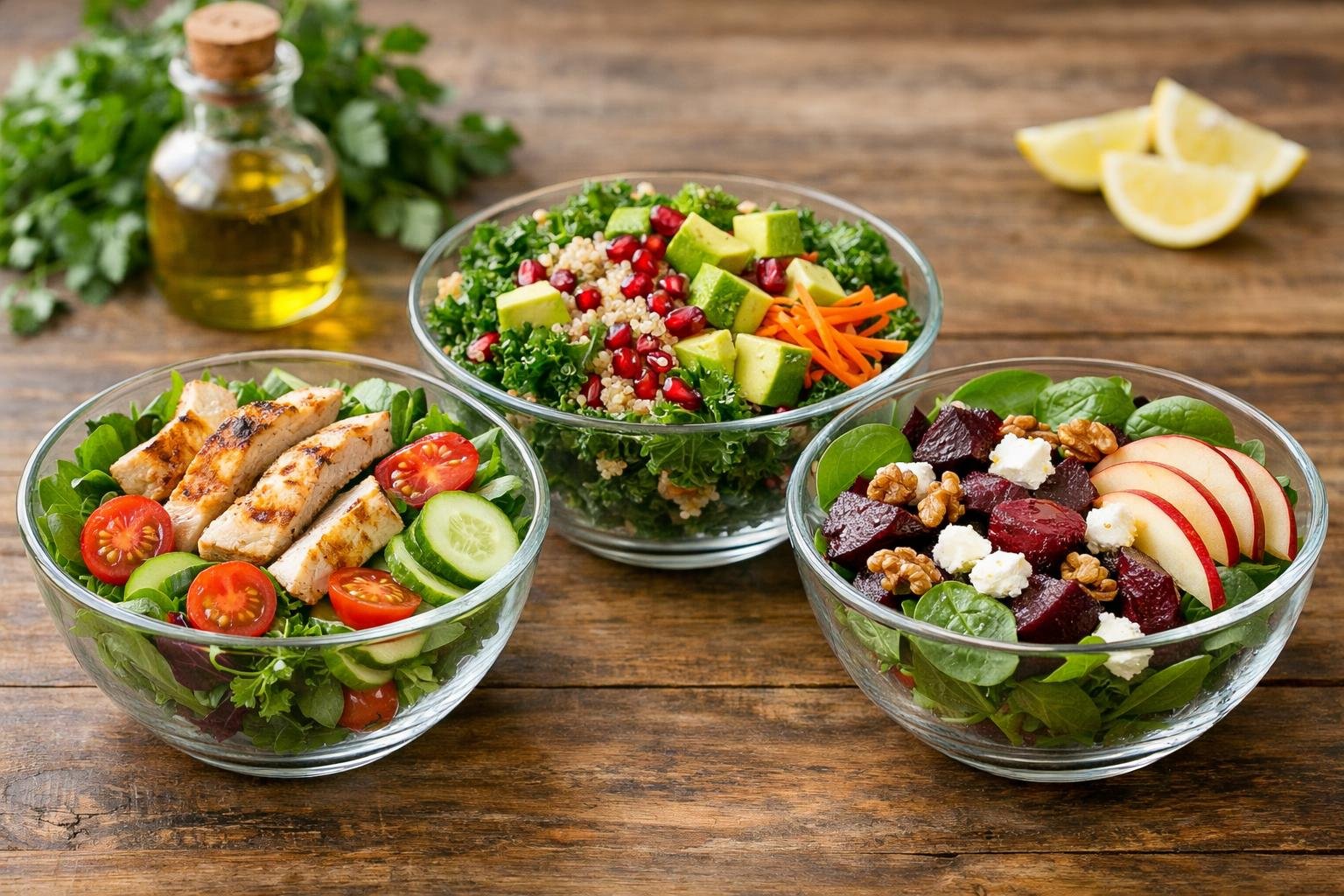
Salads can actually be a solid tool for weight loss—if you build them right. The trick is mixing lean protein, fiber-rich veggies, healthy fats, and a light dressing so you get a filling meal without piling on calories. A lot of folks think salads are boring, but honestly, they don’t have to be.
The recipes here play with different flavors and textures, making weight loss meals something you might actually crave. They use ingredients that help manage hunger and give your body the good stuff it needs. Plus, you won’t have to hunt down specialty ingredients—just regular grocery store fare.
These aren’t fussy recipes. You can whip them up in about 15 minutes, which is handy for hectic days or when you’re doing meal prep for the week. They hit that sweet spot between tasty and nutritious, so you won’t feel like you’re missing out just to eat healthy.
Key Takeaways
- To stay satisfied, build weight loss salads with protein, fiber, healthy fats, and just enough dressing
- The recipes mix up flavors and textures to keep things interesting
- Each salad is quick—15 minutes or less—and uses easy-to-find ingredients
Essential Principles of Weight Loss Salads

If you want salads that actually help with weight loss, you’ll need more than just lettuce. Combining protein, fiber-rich veggies, and smart toppings turns a salad into a meal that keeps you full and supports your goals.
What Makes a Salad Recipe Effective for Weight Loss
For weight loss, a salad should fill you up and give you nutrients without loading you with calories. It’s not just about veggies and dressing—you want the full meal deal.
So what matters? First, you need enough protein so you’re not hungry an hour later. Next, fiber from veggies and whole grains helps with fullness. Healthy fats (but not too much) help your body use the nutrients. And honestly, if it doesn’t taste good, you’re not going to stick with it.
Sticking to salads in the 300–500 calorie range gives you enough energy for a meal while still helping create that calorie deficit for weight loss.
The Importance of Lean Proteins and Fiber
Lean proteins are the backbone of a filling salad. Your body actually burns more calories digesting protein than carbs or fats—kind of a bonus.
Add 3-4 ounces of protein to each salad. Good picks: grilled chicken breast, canned tuna, salmon, shrimp, hard-boiled eggs, chickpeas, lentils, or tofu. You’ll get about 20–25 grams of protein per serving, which helps you keep muscle as you lose weight.
Fiber’s the other big player. Aim for at least 8–10 grams per salad. Get it from veggies, beans, whole grains (like quinoa or farro), and nuts or seeds. Chickpeas and lentils are especially handy since they give you both protein and fiber.
Choosing Leafy Greens and Colorful Veggies
Leafy greens give your salad volume without a lot of calories. Each type brings its own thing to the table—nutrients, texture, flavor.
Some nutrient-dense leafy greens:
- Spinach (iron, folate)
- Kale (vitamins A, C, K)
- Arugula (peppery kick)
- Romaine (crunch, vitamin C)
- Mixed greens (a little of everything)
Colorful veggies mean more vitamins, minerals, and antioxidants. The more colors, the better. Red peppers, purple cabbage, orange carrots, yellow squash, white cauliflower—they all add something different.
Non-starchy veggies like cucumbers, tomatoes, radishes, and bell peppers bulk up your salad and keep calories low. You can really load up on these without worrying about overdoing it.
Healthy Homemade Dressings and Toppings
Bottled dressings are often packed with sugar and unhealthy fats. Making your own gives you control over what’s going in—and how much.
For a basic healthy dressing, try a 3:1 ratio of oil to acid. Olive oil or avocado oil work well. Lemon juice, lime juice, or vinegar add brightness. A lime dressing (lime juice, olive oil, garlic) is zesty without being sweet. Sesame dressing (sesame oil, rice vinegar, ginger) is great for Asian salads. Tahini dressing (tahini, lemon juice, water) makes things creamy without dairy.
Stick to 2 tablespoons of dressing per salad to keep calories in check. For crunch, add a measured sprinkle of nuts, seeds, or roasted chickpeas instead of croutons. Fresh herbs like cilantro, basil, or parsley give a flavor boost without extra calories.
3 Weight Loss Salad Recipes with Unique Flavors

Here are three salads that pack a punch with flavor and keep you full with ingredients like chickpeas, white beans, quinoa, and fruit. Each one brings protein and fiber to the table, helping you stay satisfied without overdoing it on calories.
Chickpea Avocado Salad with Lime Dressing
This one’s all about plant-based protein and healthy fats. Grab a 15-ounce can of chickpeas (rinse and drain), dice up an avocado, throw in some cherry tomatoes, cucumber, and red onion.
The lime dressing is the star here—just mix fresh lime juice, olive oil, minced garlic, and a pinch of cumin. Bright, fresh, and not heavy at all.
Add some chopped cilantro, salt, and pepper. Chickpeas deliver about 7 grams of protein per half cup, and avocado gives you those healthy fats that help your body soak up the good stuff.
This salad holds up well for meal prep. If you’re making it ahead, wait to add the avocado until you’re ready to eat so it doesn’t get mushy.
White Bean and Quinoa Power Salad
This combo is super filling and gives you complete protein. Cook half a cup of quinoa and let it cool, then mix in a can of white beans (cannellini or great northern are both good).
Add diced bell peppers, shredded carrots, and chopped parsley. Between the beans and quinoa, you get plenty of protein and fiber—white beans alone offer 8 grams per half cup.
For the dressing, whisk up olive oil, red wine vinegar, Dijon mustard, and a bit of honey. It’s light but flavorful.
The mix of quinoa and beans keeps you full for a long time. One serving is about 300 calories and gives you 12–15 grams of protein. You can eat this cold or at room temp—whatever you’re in the mood for.
Spinach and Strawberry Poppy Seed Salad
Sweet meets savory here. Start with a bunch of fresh baby spinach. Add sliced strawberries, slivered almonds, and a little goat cheese or feta if you like.
The poppy seed dressing is simple: olive oil, apple cider vinegar, a little honey, and poppy seeds. It’s light and lets the fruit shine.
Some thin red onion slices add bite to balance the strawberries. Spinach brings iron and vitamins, and it’s super low in calories.
This salad is best when strawberries are in season. Almonds add crunch and healthy fats—just keep the cheese and nuts in check if you’re watching calories. One serving clocks in around 250 calories and gives you about 6 grams of protein.
Frequently Asked Questions
Making salads that help with weight loss but still keep you full means knowing which ingredients actually satisfy, how to balance nutrients, and how to boost flavor without sneaky calories.
Which salad ingredients are most effective for staying full while keeping calories low?
Leafy greens like spinach, kale, and romaine are your best bet—they give you lots of volume for very few calories. You can eat a big bowl and barely hit 50 calories, plus you get fiber to help you feel full.
Non-starchy veggies—cucumbers, bell peppers, tomatoes, broccoli—add crunch and bulk without bumping up calories much. They’re full of water and fiber, which helps stretch your stomach and trigger fullness.
Lean proteins are a must for staying satisfied. Grilled chicken, turkey, hard-boiled eggs, tofu, or chickpeas all work. Toss in 3–4 ounces, and you’ll stay full for hours with only about 120–150 calories added.
How can I build a balanced salad with enough protein for weight loss goals?
Start with 3–4 ounces of protein—think grilled chicken, salmon, shrimp, beans, lentils, or cottage cheese. That gives you 20–30 grams per salad.
Add a little healthy fat: maybe a quarter avocado, a tablespoon of nuts, or a teaspoon of olive oil in the dressing. These help your body use vitamins and keep you satisfied longer.
Don’t forget at least two cups of mixed veggies for fiber and nutrients. Mix up the colors—red peppers, purple cabbage, orange carrots—for a good spread of vitamins.
If you need more energy (especially post-workout), a small scoop of complex carbs like quinoa, sweet potato, or brown rice is fine. Stick to half a cup or less to keep calories reasonable.
What are the best low-calorie salad dressings that still taste good?
Balsamic vinegar with a splash of olive oil makes a tangy dressing—about 50 calories per tablespoon if you use a 3:1 vinegar-to-oil ratio.
Plain Greek yogurt is a solid creamy base. Mix it with lemon juice, garlic, and herbs for a protein-packed dressing with only 20–30 calories per two tablespoons.
Lemon or lime juice and fresh herbs give you bright flavor for almost no calories. Add a bit of Dijon mustard for depth, or a touch of honey if you want it a little sweet.
Store-bought dressings are okay if you pick ones under 50 calories per serving. Check the label—oil or vinegar should be the first ingredient, not sugar or cream.
How do I meal-prep salads so they stay fresh and don’t get soggy?
Keep wet and dry ingredients separate until you’re ready to eat. Store dressing in a small container and add it just before serving.
If you need to pack everything together, layer it: hearty veggies like carrots, cucumbers, or peppers go at the bottom, proteins and grains in the middle, and delicate greens on top.
Mason jars are handy for grab-and-go salads. Put dressing at the bottom, then hard veggies, protein, grains, and greens last. When you’re ready, just shake it up.
Prep your proteins and chop your veggies at the start of the week, but assemble salads either daily or the night before for best freshness. Most salads will stay good for 3–4 days if you store them in airtight containers.
What are smart swaps for high-calorie toppings like croutons, cheese, and creamy dressings?
Try swapping croutons for toasted chickpeas or pumpkin seeds. They’ve got the crunch you want, plus some extra protein, and way fewer empty calories. A quarter cup of roasted chickpeas clocks in at about 60 calories, while the same amount of croutons? That’s more like 120.
If you’re after that cheesy vibe, sprinkle on some nutritional yeast. It’s got a savory, almost cheesy flavor, but just 20 calories in two tablespoons—and hey, you get some B vitamins and protein too.
Instead of creamy dressings, go for Greek yogurt-based ones. You’ll keep the creamy feel, slash the calories by half, and sneak in more protein.
And if you’re craving sweetness, toss in fresh fruit like apple slices or berries instead of dried cranberries or candied nuts. You’ll get more fiber, more volume, and the same calories, but it just feels fresher, doesn’t it?
How can I add flavor to salads without relying on added sugar or excess oil?
Fresh herbs—think basil, cilantro, dill, parsley—can totally transform a salad. Just chop up a handful and toss them in. They add brightness and a punch of flavor without piling on calories.
Citrus is another go-to. Squeeze some lemon, lime, or even a bit of orange juice over your greens. Zest works too, and that tang really wakes everything up. It’s kind of wild how much better veggies taste with a splash of acidity.
Don’t forget spices and seasonings. Garlic powder, onion powder, cumin, smoked paprika—they all work. Try sprinkling them on your salad or even coating your protein before cooking. You’ll get layers of flavor without needing extra oil or sugar.
For more depth, throw in something with umami. Tomatoes, mushrooms, or even a dash of soy sauce can do wonders. Pickled veggies like jalapeños or red onions? Those add a sharp kick and barely any calories. Honestly, salads don’t have to be boring if you play around with these.